
Only 1% of all questions are answered correctly! Landmark Country Prediction Quiz
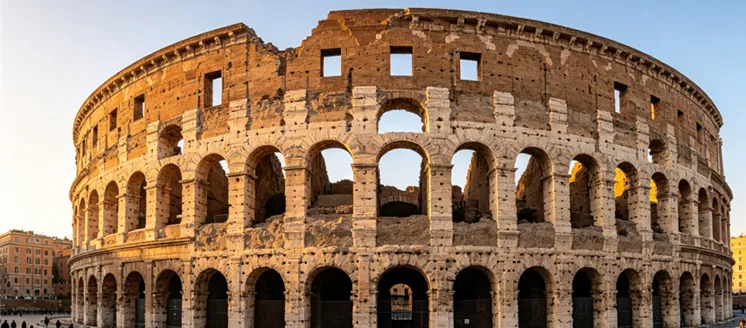
The ancient Roman amphitheaters were the site of some of the most intense battles in history and are now popular tourist destinations for people from all over the world.
Which country is the historical home of the legendary Colosseum?
Advertisements
Advertisements
📌 Challenging the Simple Equation: Landmark = Country
Do you have the ability to connect famous landmarks around the world to the correct country from just one photograph? We encounter iconic buildings and landscapes from around the world every day through travel magazine covers, social media timelines, and movie scenes. The Eiffel Tower, the Leaning Tower of Pisa, the Statue of Liberty, Gyeonggi County (Palace), everyone knows these names, yet when asked, "In which country was this photograph taken?", surprisingly many people find themselves at a loss for words. This is because our brains simply memorize the equation "landmark = country," without being aware of the surrounding environment or subtle differences. However, this quiz directly challenges that assumption; it's a comprehensive test of geographical perception.
👥 Target Audience – Everyone with a wanderlust and intellectual curiosity
📸 People who follow the world's landscapes in travel magazines and on social media
You, who can't help but click "Like!" on the stunning landscape photos that appear on your timeline every day. Your visual sensitivity and memory give you the ability to intuitively discern which country a photo was taken in from the minute details within the image. In particular, photographs of famous landmarks taken from "unusual angles" will be excellent material for enjoying deduction by comparing them with your accumulated image database.
🗺️ Geography enthusiasts who have been familiar with world maps since childhood
Back then, you memorized borders, capitals, rivers, and mountain ranges. The world's topography is imprinted in your mind in three dimensions, and you have an intuitive ability to instantly identify locations from the shape of coastlines, mountain ridges, and meandering river patterns in photographs. The ability to interpret the entire landscape behind landmarks is a powerful weapon for you.
🏛️ A Cultural Explorer with a Deep Interest in History and Architecture
You can discuss the differences between Gothic and Romanesque architecture, revel in the beauty of Islamic geometric patterns, and be overwhelmed by the intricate details of Hindu temple carvings, you are a rare individual who can decipher the language of architectural styles. The photographs in this quiz are full of historical clues, such as the stonework of the building's exterior, the shape of the windows, and the decorative motifs. Your expert eye will easily solve this challenging problem that confuses many.
🖼️ Photo Variations – Don't Let Your Guard Down, Even If They Look Familiar
🔍 Close-Up – Deciphering the "Fingerprint" of Architecture
A photograph showing only a portion of a building. What is reflected there are the details of the stone carvings, the decorations on the column capitals, the door handles, and the window frame moldings. The type of stone, the degree of weathering, and the style of carving speak eloquently to the era and cultural sphere in which the building was constructed. For example, if granite was used, the possibility of Egypt or India increases; if limestone, the Mediterranean coast; and if red sandstone, the Middle East or western India. It is not uncommon to narrow down the country based solely on the building materials.
🌆 Silhouettes in the Twilight – A Magical Time When Forms Emerge
The silhouettes created by the setting sun or nighttime lighting, instead of hiding the details, highlight the outlines of the building. The curves of the domes, the number and height of the spires, the rows of arches, the slenderness of the minarets, these are clues to determining whether it is Islamic architecture, Gothic, Baroque, or a modern, organic design. The color of the light (warm-toned streetlights or bluish-white fluorescent lights) also reflects the infrastructure culture of the country or region and is a valuable point of observation.
🛩️ Panoramic Views from Above – The Relationship Between City and Nature
Photographs taken from airplanes or drones offer a comprehensive view of the relationship between landmarks and their surrounding environment. Whether ruins are buried in the jungle, isolated in the desert, or situated amidst modern buildings, their location tells a story of the climate zone, the degree of urbanization, and even the level of protection they receive. For example, the surrounding environment of the pyramids is completely different in the suburbs of Giza compared to the city of Teotihuacan, and this alone can narrow down the possibilities.
🔄 Behind the Scenes and Everyday Angles – The Untold Truth
Shots from the back entrance or sides that you'll never find in a tourist guide. Or, scenes of the building under scaffolding for restoration, or everyday moments when it's been transformed into an event venue. When a familiar landmark reveals a completely different face, the "official image" in your memory can actually get in the way. These kinds of photos are the true test of your observational and deductive skills, and are the essence of this quiz.
🔍 Clues to Observe – "Evidence of Place" to Guide You to the Right Answer
🏗️ Architectural Style and Materials – Cultural Spheres Revealed by Stone and Motifs
Whether the arches are pointed or circular, whether the columns are Doric or Ionic, whether the decorations feature plant motifs, geometric patterns, or human figures. These elements are the most fundamental clues to identifying the civilization and architectural style (Gothic, Romanesque, Renaissance, Islamic, Hindu, Buddhist, Modernism, etc.) to which the building belongs. For example, if there are spires and arabesque patterns, it might be Islamic; if there are pointed arches and flying buttresses, it might be Gothic Europe; and if there are shri kala (high gate towers) and a Hindu temple with many sculptures, it might be South India.
🌿 Vegetation and Climate Indicators – Latitude Revealed by Sky and Greenery
The plants in a photograph, palm trees, cacti, conifers, deciduous trees, bamboo groves, or moss-covered stone walls, clearly reflect the climate zone and elevation of the location. The humid air of the tropics, the yellowish light of arid regions, the clear blue skies of temperate zones, and the low position of the sun in cold regions. The combination of light quality and vegetation provides extremely powerful clues for identifying continents and countries.
📝 Artificial Signs – Letters, Signs, and License Plates
The lettering on signs visible in the corner of a photograph (Latin, Cyrillic, Arabic, Chinese characters, Devanagari, etc.), the colors and shapes of road signs, and the design of car license plates. These are "direct pieces of evidence" that directly show the country's official language and legal regulations. For example, while blue signs with white lettering are common in many European countries, subtle differences in font and shield-shaped design can sometimes distinguish between Italy, France, and Spain.
👤 People's Appearances and Lifestyle – Clothing, Behavior, and Items
The clothing (traditional costumes, suits, casual wear), belongings (umbrellas, bags, smartphones), and behavior (riding bicycles, shopping at stalls) of passersby accidentally captured in photographs tell the story of the country's cultural level, economic standards, and adaptation to the climate. For example, details such as whether a woman is wearing a scarf, or whether she is wearing sandals or boots, can also be valuable clues to identifying the region.
🎢 Difficulty and the Trap of "Look-alikes"
🎭 The more familiar something is, the more misleading it can be – a collection of similar-looking landmarks
You might have thought a photograph of the Great Wall of China was actually of Bukhansanseong Fortress in South Korea. There's an Italian monastery that looks remarkably similar to Mont Saint-Michel in France. The pyramids of Egypt and Mexico are surprisingly similar at first glance. These "look-alikes" and "copycat buildings" cleverly blur your memory and lead you into a labyrinth. This quiz demands keen observational skills above all else to discern these subtle differences.
🕰️ Historical Changes and Renovations – Today's Appearance is Different from the Past
Some landmarks have undergone repeated renovations and expansions over centuries, resulting in their current appearance being significantly different from when they were first built. That photograph in your memory might actually be decades old, and the landscape may be completely different today. For example, the spire of Notre Dame Cathedral was rebuilt after a fire, and the appearance of the Arc de Triomphe has also changed due to surrounding road development, flexible thinking that takes historical changes into account is necessary.
📊 Shocking Data – Only 1% Answer All Questions Correctly
According to data from past contestants, the harsh statistic is that only 1% are able to answer all 40 questions correctly. Many people can solve the first few questions smoothly, but from the middle of the test onward (especially after question 20), the boundaries of their knowledge become blurred, and they often get lost in a maze of choices. However, those in that 1% are by no means geniuses or world travel veterans. They simply have the habit of carefully observing every detail of the photographs and building logical reasoning, that's the only difference.
🧠 Not a Memorization Competition – Comprehensive World Heritage Literacy
📚 A Deep Understanding of History, Art, and Culture
This quiz is not simply a test of memorization, but rather a test of a deep understanding of historical changes and regional culture, in other words, true "World Heritage literacy." Why was that landmark built? What civilizations and ethnic groups were involved? How is it preserved and used today?, This kind of background knowledge will give you the ability to interpret the "inconsistencies" in the photograph. Your intellectual curiosity will be your compass to the correct answer.
🔎 Training in Logical Reasoning and Observation Skills
When you're unsure of the answer, it's helpful to quickly scan the entire photograph, then check the details in each of the four corners. The blueness of the sky, the shape of the clouds, the shades of green in the vegetation, the degree of weathering on the building's surface, the direction of the shadows, all of these tell us about the climate, altitude, and availability of building materials of that place. The short hints provided with the problem (historical dates and cultural keywords) can also lead to unexpected solutions. By repeating the cycle of observation and reasoning, you too can acquire that "1%" way of thinking.
🏆 Titles and Scores – Reflecting the Depth of Your Gaze to the World
📊 4 Levels of Titles
Upon completing all 40 questions, you will be awarded one of four titles based on your number of correct answers. Your score is not just a number; it's a barometer that reflects the depth of your gaze to the world you have traveled, read, and dreamed of. From "atlas beginner" to "World Heritage master," your current level will be clearly visualized.
✈️ Hints for Your Next Travel Destination
Even if you get it wrong, it's not a failure. Because the landmark you got wrong in this quiz is the "destined destination" you should actually visit next. Mistakes are the seeds of new discoveries, and your interest in that place will further fuel your passion for travel. The world's famous landmarks are waiting for your visit.
💡 Message – History and Art Condensed in a Single Photograph
📸 A Condensation of History, Art, and People's Lives
A single landmark photograph condenses the technology, artistry, power structures, and beliefs of the era in which the building was constructed, and the story of its preservation and use up to the present day. The weathering of the stone surface, the intricate details of the carvings, the traces of restoration, the contrast with the modern architecture built around it, all of these tell a story of human activity spanning hundreds, even thousands, of years. Your keen observation skills will unravel that story, like turning the pages of a book.
🗝️ The Key is Your Curiosity and Observation
Close your eyes, recall your memories, and use your logic. The world's famous landmarks hide an astonishing amount of information in just one photograph. It is you who will unravel the mystery and elevate your knowledge to a "world-class" level. Step by step, surely, awaken the "geographical Sherlock Holmes" within you.
🚀 The Final Word – Opening the First Picture
🌟 Are You Ready?
Now, let's finally open the first picture. With your favorite drink in hand, relax and let your eyes guide you to a different country, start your journey right here. From the steel framework of the Eiffel Tower and the shadow of the pyramids to the torch of the Statue of Liberty and the ruins of hidden, undiscovered places, countless landmarks await your answers, stimulating your curiosity. And if you manage to answer all the questions correctly, you will join the rare "1%." Experience the thrill of that moment.
Advertisements