
If I can figure this out, that would be amazing! Food Secrets Quiz 40
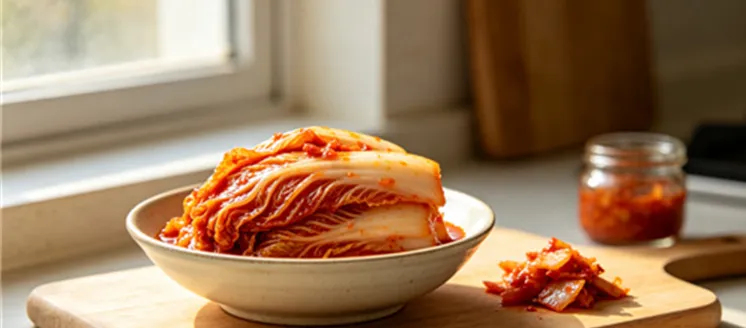
Kimchi is a spicy fermented cabbage dish packed with probiotics and rich flavor. It's an everyday staple and a true cultural icon in Korea.
What are some classic Korean fermented foods that provide spice and heat?
Advertisements
Advertisements
🎯 40 Questions Full of Tricks to Keep You Off Your Guard
If you're a foodie glued to late-night cooking shows, or an adventurous spirit excited by picking up unfamiliar seasonings at the weekend market, then this quiz is a thrilling challenge that will completely overturn your "common sense about food". However, here's a warning. Whether you consider yourself a gourmet or a skilled cook who prepares meals for your family every day, everyone starts on the same playing field in this quiz. That's because all 40 questions are packed with tricks designed to keep you off guard. The moment you think, "This is easy," the problem, with a gentle smile, will lure you into a deep labyrinth.
👥 Target Audience – From Foodies to Culinary Masters
🍜 Foodies glued to late-night cooking shows
You sit in front of the TV, exclaiming, "Oh, I want to eat that!", intently watching the chef's hands. Your insatiable appetite and curiosity give you the ability to deduce the identity and origin of the dish from the fine details of the ingredients and presentation in the photos. Your passion for "wanting to eat" is the driving force to find the answer.
🛒 An adventurous person who gets excited finding rare seasonings at the market
Picking up bottles of spices and fermented seasonings you've never seen before, smelling them, reading the labels, and imagining, "What is this used for?" is the most enjoyable part. Your curiosity and olfactory memory will be powerful weapons in uncovering the true nature of the powders and pastes that appear in the questions. Your experience will be especially valuable in the spice questions.
👩🍳 A master cook who prepares meals for their family every day
You've spent years wielding a knife, judging the heat, and adjusting the balance of flavors. Your "instinct" for preparing ingredients and combining seasonings will provide clues to deciphering the process and handling of ingredients of the dishes in the photos. Your practical experience will allow you to intuitively recognize even difficult problems, thinking, "Ah, this is how you make that!"
🖼️ Problem Variations – See, Smell, and Think
🌶️ Identifying Spices – The Cinderellas of Brown Powders
Even though they may look similar, cumin, coriander, turmeric, paprika, cardamom, cloves… If you were asked to identify them using only photos and scent descriptions ("sweet and spicy," "slightly bitter," "citrusy"), could you answer with confidence? The subtle visual differences in color intensity, particle size, and the presence or absence of oil are what determine the correct answer, this is a test for spice masters.
🍎 Guess the Fruit's Cross-Section – Uncovering its Identity from a Part of the Peel
You're shown only a cross-section photo, or a close-up of the peel, and you're faced with a series of perplexing questions like, "Is this an apple? Or a pear? Or is it actually a cashew apple?" The arrangement of seeds, the texture of the flesh, the shape of the center, your ability to decipher the "fingerprint" that the cross-section reveals is put to the test. Even fruits you casually buy at the supermarket become mysterious when judged solely by their cross-section.
🍝 Quiz on the Roots of Cuisine – Unexpected Facts You Didn't Know
That famous pasta sauce isn't actually from Italy; that national dessert was born from an accidental mistake; that classic spice was originally a medicine, A collection of questions where "lies that appear to be true" and "truths that appear to be lies" are intertwined. Difficult questions involving history, geography, and ethnic migrations will challenge your common sense and relentlessly shake your "knowledge."
🥘 Evidence Hidden in Plating and Dishes
The photos accompanying the questions contain countless clues, not only about the food itself, but also about the shape and material of the dishes used, the plating style, and the labels of the condiments visible in the background. For Japanese cuisine, lacquerware; for Italian cuisine, flat plates; for ethnic cuisine, bowl-shaped dishes, these are all "whispers" that tell us about the origin and cultural sphere of the cuisine. Your keen observation skills, paying attention to details, will pave the way to the correct answer.
🔍 Clues to Observe – Small Anomalies Tell the Truth
🧂 Color, Particles, and Sheen – Evidence of Powder
Powdered spices and seasonings each have their own unique shade, particle size, sheen, and oil content. For example, turmeric is a bright yellow and fine powder, paprika is reddish and somewhat coarse, and cumin is brownish and has a strong granular texture. If you remember these visual characteristics, you can identify most spices from a photograph alone.
🍽️ Plating Style and Decoration
How the dish is plated, how herbs and sauces are added, and the presence or absence of garnishes. These clearly reflect the culinary tradition to which the dish belongs. For example, Italian cuisine often features parsley or basil leaves, Japanese cuisine uses ginger or shiso leaves, and ethnic cuisine tends to use coriander or mint. You can narrow down the cultural sphere by looking at the "garnishes" in the photograph.
🏺 Shape and Material of Dishes
The shape and material (ceramics, porcelain, lacquerware, wood, metal) of the plates, bowls, and cups used reflects the craftsmanship and eating habits of the region. For example, deep bowls are for soup or curry, flat plates for pasta or steak, and small bowls for rice or miso soup, you can infer the category of the dish from the dishes and use them as clues to identify the country or region.
🏷️ Labels and Packaging in the Background
The bottles of seasonings, food packaging, or recipe notes visible in the corner of the photo. The text (language), design, and brand name written there can directly indicate the country or region where the dish was made. These are often intentionally placed and are crucial clues that shouldn't be overlooked.
🎢 Difficulty and Tricks
📈 Not in Order, Don't Let Your Guard Down
The questions don't come in easy order. You might start with a simple question like, "Is this a way to distinguish between salt and sugar?", only to suddenly encounter difficult questions like, "Variations of Kimchi Around the World" or "Origins of Fermented Seasonings." Your confidence may be mercilessly shattered by the next question.
🎭 "Lies That Seem True" and "Truths That Seem Lies"
The most terrifying thing about this quiz is that all the answer choices and explanations are composed with a delicate balance that makes you want to doubt, "Is that really true?" You might even learn that common sense you've believed for years is actually wrong. There are so many things that will make you exclaim, "Wait, really?", that even professional chefs will groan, "Hmm..."
⏳ No Time Limit – Take Your Time to Savor Each Problem
There's no need to worry about the clock. We recommend solving each problem slowly and savoring it, perhaps with a cup of coffee or tea in hand. Taking your time is the best way to notice subtle nuances in the problem statement, shadows and reflections in the photos, and distortions in the presentation, these kinds of "inconsistencies."
🧠 Not about boasting about knowledge – where diverse experiences intersect
🔪 The sensory memories of someone who actually cooks
You, who hold a knife every day, judge the heat, and adjust the flavor, possess a treasure trove of real-world experience regarding the texture, aroma, and changes caused by heating of ingredients. For example, looking at a picture of spices brings back the sensation of smelling them, and looking at a picture of a dish recreates the process in your mind. That experience provides the shortest route to the correct answer.
📚 Knowledge of someone familiar with the history and culture of food
Someone who knows how that dish was created and how it spread throughout the world, the story behind food, can decipher the folkloric clues hidden in the problem. For example, knowing that tomatoes were introduced to Italy after the 16th century changes the definition of "classic Italian sauce."
🌍 A Perspective for Those Interested in Global Eating Habits
People sensitive to the diversity of food culture, different table manners, cooking utensils, and meal times in different countries, can deduce which household a dish is eaten in from the details of the tableware and presentation in a photograph. Your global perspective on food will be your guide to navigating the labyrinth.
🏆 Titles and Scores – A Mirror of Your Love and Curiosity for Food
📊 Four Levels of Titles
After completing all 40 questions, you will be awarded one of four titles based on your number of correct answers. Your score is not just a number; it's a mirror reflecting the depth of your love and curiosity for food. It will reveal your position, from a "food novice" to a "food professor."
🍳 Hints for Your Next Recipe
Even if you get it wrong, it's not a failure, but rather a sign of a "destiny recipe" that you should try recreating in your kitchen next. Discovering new dishes and spices will broaden your cooking repertoire and might even inspire you to go shopping. We hope this quiz will enrich your practical culinary life.
💡 Message – An Infinite Story Told by a Single Photograph
📸 A Dish Condensing Ingredients, Cooking Methods, and Culture
A single photograph of a dish condenses the origin of the ingredients, the skill of the chef, the climate of the land, historical trade routes, and even the lives of those who eat it. The flavors imbued in each spice, the aesthetic sense expressed in the presentation, the craftsmanship embodied in the tableware, all of these are fragments of a story that speaks to you. Distinguishing those voices is the true enjoyment of this quiz.
🗝️ The Key Lies in Your Curiosity and Humor
Look closely, imagine the aroma, and recall the taste. The world's dining tables hide an infinite number of surprises in just one photograph or one sentence of clue. It is you who will unravel the mystery and engrave your name on your own "Top of the Food Chart." Enjoy this labyrinth with a touch of humor and flexible thinking.
🚀 One Last Word – Take Your First Bite
🌟 Are You Ready?
Now, let's finally open the first bite, or rather, the first question. There, spice identification that will overturn your common sense, the mystery of fruit cross-sections, and the unexpected origins of dishes await your answers. You can tackle it with confidence, or enjoy the challenge of getting lost. Enjoy this culinary adventure at your own pace. If you answer all the questions correctly, you'll be able to confidently say, "Leave everything about food to me!", but after finishing this quiz, ask yourself again whether you can truly trust that statement.
Advertisements