
Do you recognize all these flowers? But be careful with number 11!
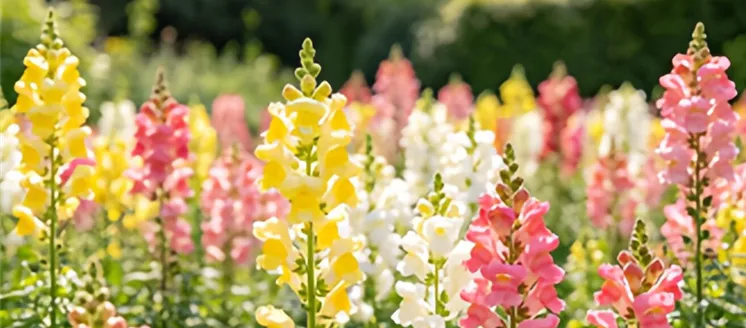
Snapdragons are a garden star that offers a playful touch, characterized by their tubular flowers.
Which flower makes a "popping" sound when you squeeze it?
Advertisements
Advertisements
🌼 40-Question Floral Challenge
Whether you're a plant enthusiast or simply someone who "likes pretty flowers," everyone is welcome. This quiz is a 40-question challenge designed to fully test your floral sense. From classic flowers that herald the arrival of spring to exotic beauties shining in tropical wildernesses, a collection of the world's "superstars" awaits. Here you'll find a truly diverse array of flowers, from the lovely spring messengers everyone has seen to the rare and unusual blossoms only found in botanical garden greenhouses, and even those with a bizarre beauty that would make people in their native habitats exclaim, "Is this really a flower?" You must use subtle gradations of color, the number and shape of petals, the arrangement of stamens and pistils, the way the leaves are attached, and the presence or absence of hairs on the stem, all seemingly overlooked "evidence of the plant", as clues to identify the correct names of the flowers.
👥 Target Audience – From Gardeners to Romantics
🌱 Gardening Enthusiasts Who Make Gardening a Daily Routine
Watering every morning, pruning, mixing fertilizers, your hands know the feel of the soil, leaves, and flowers intimately. Your actual experience growing flowers will give you the ability to interpret the growth stage of the flowers in the photos (bud, bloom, full bloom, wilting) and the health of the leaves. Your sensitivity to subtle differences in varieties will surely allow you to solve even the most difficult questions.
💐 A Romantic Who Stops at a Street Corner Flowerbed
Have you ever stopped at a flowerbed that caught your eye while shopping, and been captivated by its colors and fragrance? Your aesthetic intuition allows you to perceive the "story" behind the flower from the texture of its petals and the overall balance. This quiz will greatly benefit from that sensitivity.
🌿 An Adventurer Who Searches for Rare Species in Botanical Gardens and Greenhouses
Your hobby is visiting distant botanical gardens and tropical greenhouses in search of rare flowers. Every time you encounter a flower with a shape or color you've never seen before, you'll enjoy researching its name and origin. "A spirit of exploration for unfamiliar flowers" is your greatest weapon in this quiz.
🖼️ Photo Variations – Endless Flower Portraits
📸 Close-up of Petals Wet with Morning Dew
The fine texture of the petal's surface, where water droplets sparkle like jewels. Here, the number of petals, the jagged edges, and the pattern in the center are all clearly captured. Even the same flower looks different depending on the angle and lighting, testing your observational skills.
🌾 Distant View of a Field of Blooming Flowers
A carpet of color stretching across the landscape – in distant views, the overall atmosphere and harmony of colors are key clues. The regularity of the flowering pattern (scattered or dense), the height of the plant, and the density of the flowers provide clues to inferring whether it is a wild or cultivated species and the climate zone of its natural habitat.
🔄 The process from bud to flowering
The shape of the bud just before flowering, the pattern of the sepals, and the change in color of the petals as they begin to open. These sequential photographs tell the story of the flower's growth rhythm and the species-specific flowering process, providing extremely valuable information for identifying the genus and family.
🔬 Details of flower cross-sections and leaf veining
Longitudinal cross-sections of flowers and magnified photographs of the leaf surface hide secrets that are usually invisible, such as the internal structure and the arrangement of vascular bundles. These minute structures can be crucial evidence for distinguishing species even within the same group, and are especially powerful in obscure questions.
🔍 Clues to Observe – Small Evidence Reveals the Name
🎨 Color Gradation and Saturation
Petal colors are not simply red, blue, or yellow; they exhibit countless gradients, spots, borders, and blurs. In particular, color variation patterns (shading from base to tip) are highly distinctive to each species. For example, the pattern on the labellum of an orchid or the arrangement of spots on a lily are important keys to identifying varieties.
🔢 Number and Arrangement of Petals, Sepals, and Stamens
Are there three, five, or many petals? The number of stamens and their position relative to the pistil. These numbers are basic attributes in plant taxonomy, and are directly related to identifying plants at the family level. For example, the Liliaceae family has six petals and six sepals, the Brassicaceae family has four, and the Asteraceae family has a combination of tubular and ray florets.
🍃 Leaf Shape, Arrangement, and Veining
Whether the leaves are opposite or alternate, simple or compound, whether the margins are smooth or serrated, and whether the veins are parallel or reticulate. These reflect the growing environment and evolutionary lineage of the flower, and even if only a small portion of the leaf is visible in the photograph, the candidates can be significantly narrowed down.
🌿 Stem and Bud Characteristics – Presence or Absence of Hairs, Node Shape
Whether the stem is hairy, whether it is a vine or erect. The shape of the bud (spherical, oval, or spindle-shaped) and the pattern of the bud's scales. These characteristics of inconspicuous parts are often crucial clues, especially in distinguishing closely related species.
🎢 Difficulty and the Legendary Question 11
📈 No Order Required, Don't Let Your Guard Down
The questions don't come in order from easiest to hardest. You might feel relieved at first with familiar questions like tulips and sunflowers, but then suddenly a difficult question appears that will make you scratch your head and think, "Wait, what is this?" Question 11, in particular, is a legendary wall, rumored to have made many people cry out, "I can't do this anymore!"
⚠️ Question 11 – A Trick with a Severely Low Correct Answer Rate
The flowers featured in this question, at first glance, appear plain like common weeds, but upon closer inspection, they hide amazingly intricate patterns, or they might look like orchids but actually belong to the lily family, there's some kind of "trick" at play. Rumor has it that the correct answer rate is only a few percent... Can you overcome this legendary obstacle and earn the title of true flower master?
⏳ No Time Limit – The Luxury of Relaxed Observation
Prepare your favorite beverage, whether coffee or tea, and take on the challenge in a relaxed state. Without worrying about the clock, you can engage with each photograph, carefully observing everything from the jagged edges of the petals, the way the leaf veins run, the direction of the buds, to the blurred shapes of the leaves in the background. The more time you spend, the more the flowers in the photographs will speak to you.
🧠 Not about showing off knowledge – Dialogue with flowers from diverse perspectives
🌱 The strength of real-world experience and cultivation knowledge
Those who have actually grown flowers can utilize their real-world experience, including the growth cycle, fragrance, texture, cold and heat tolerance of those flowers. For example, they can estimate the amount of sunlight from the color and sheen of the leaves, or imagine good air circulation from the hardness of the stems, information on a level that cannot be obtained from photographs alone becomes a weapon.
📖 Understanding Flower Meanings and Cultural Background
Cherry blossoms in Japan symbolize "ephemerality," lotus flowers symbolize "purity," and roses symbolize "love", knowing the symbols and cultural stories embedded in flowers can lead to new discoveries about the intentions behind the shooting location and composition. In particular, knowledge of which country's national flower a flower is or what festivals it is used in can be helpful when identifying the capital or region from the background and decorations in a photograph.
🧐 A Fresh Perspective from a Beginner
Conversely, not having a background in botany has the advantage of being able to judge based on the overall impression and beauty rather than focusing on the details. Experts tend to focus on taxonomic details, but beginners can intuitively grasp "the atmosphere of this flower." The beauty of this quiz lies in the fact that everyone, at any level, can shine with their own unique perspective.
🏆 Titles and Scores – A Barometer of Curiosity and a Love of Beauty
📊 4 Levels of Titles
Upon completing all 40 questions, you will be awarded one of four titles based on your number of correct answers. The score is not just a number, but a barometer that reflects the depth of your curiosity about nature and your love for beauty. Whether you're a "flower expert," a "beginner gardener," or somewhere in between, a "floral explorer", your title visualizes your attitude towards flowers.
🌹 Encountering Your Next Flower
Even if you get it wrong, it's not a failure. Because the flower you learn about for the first time in this quiz might be your "destined flower" that you want to grow next. Or, you might be inspired to actually go and find the flower you got wrong in a botanical garden. This quiz helps you connect with new flowers.
💡 Message – A single photograph tells a story of color and emotion
📸 A moment condensed with color, shape, scent, and story
A single photograph of a flower condenses the climate, soil, growing process of the flower's origin, and even the light and wind at the moment of blooming. The way the petals open, the direction of the leaves, the angle of the bud, all of these are evidence of the story that flower has lived. By deciphering that story and giving it the right name, you can transform the flower in the photograph into an eternal "superstar."
🗝️ The key is your sensitivity
Look closely, imagine the scent, and imagine the touch. For a long time, flowers have been waiting for someone to recognize their beauty. Your answer will bring about that long-awaited moment. Now, give these flowers a name.
🚀 The Final Word – To the Wonderland of Flowers
🌟 Are You Ready?
Now, let's finally open the first card. There, countless flowers, from delicate spring fairies to eerie tropical beauties, await your answer. Don't be afraid, don't hesitate, trust your intuition and sensibilities, the flowers have been waiting for you to call them by the right name.
Advertisements