
Wie viele der 16 Hauptstädte Asiens können Sie nennen?
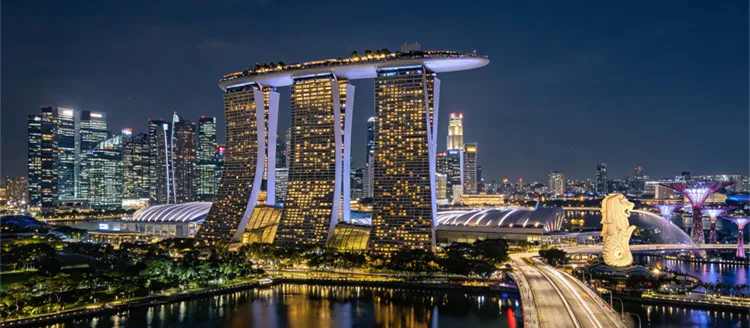
Welcher Stadtstaat fungiert als glamouröse Hauptstadt auf der Weltbühne?
Werbung
Werbung
🌏 Theme of the Challenge – Deciphering Asia, a Miniature Earth
📍 A Geopolitical Full Course Woven by 40 Capitals
Asia, the world's largest land area, from frigid tundra to scorching tropical rainforests, from parched deserts to flooded deltas, is a region that can be called a ""miniature Earth"" where all climates on Earth are condensed into one continent. This region is home to approximately 40 independent countries, each with its own unique language, religion, cuisine, and urban landscape. This quiz is a ""geopolitical full course"", requiring you to identify the ""capitals"" that symbolize this astonishing diversity, based on just one photograph and a few lines of hints. From neon-lit megacities to ancient World Heritage cities and the capitals of obscure island nations, your knowledge and intuition will be fully utilized.
👥 Target Audience – Map Enthusiasts, Travelers, and Modern Nomads
🗺️ People Who Enjoy Tracing World Maps with Their Fingers
Since childhood, you've memorized borders, recited capital city names, and contemplated ocean currents and mountain ranges. Your extensive mapmatic memory is a powerful tool for instantly narrowing down candidates based on the shape of coastlines, the meandering of rivers, and the silhouettes of adjacent mountain ranges in photographs. Asia's complex borders are practically your backyard.
✈️ Modern Nomads Who Float Between Airport Lounges on Business Trips and Travel
You frequently use Asian airports for both business and leisure, experiencing the ""atmosphere"" of each city. From terminal design and the language of signs in the arrival lobby to the types of taxis and even the view from the boarding gate, these fragments of real-life experiences provide surprisingly accurate intuition when interpreting subtle clues in photographs (sign fonts, sidewalk materials, streetlight designs).
📺 Armchair Travelers Who Follow Cities Through News and Documentaries
Even without actually visiting, you are intimately familiar with Asian cities through videos and articles. Sophisticated Image Training Through Media is extremely useful here. For example, when you see the skyline of a capital city, you can instantly determine from the architectural style of the buildings and the patterns of the roadside landscaping whether it's a city in an emerging economy or a historical ancient capital.
🖼️ Photo Variations – Endless Angles and Details
☀️ Clear Daytime Cityscapes – A Treasure Trove of Materials and Languages
Photographs taken on sunny days reveal architectural materials (brick, stone, concrete, glass), roof shapes, and the types of lettering used on signs (Chinese characters, Cyrillic, Arabic, Latin, etc.) in vivid detail. This provides a crucial clue for identifying linguistic regions and architectural cultures. For example, a sign with a mix of Chinese characters and Vietnamese Latin letters might be Hanoi or Ho Chi Minh City, while a prominent Arabic script suggests a city in West Asia.
🌆 Silhouettes of Twilight and Nightscapes – Contours Revealed by Light
Evening and nighttime photographs, instead of obscuring details, highlight the silhouettes and light patterns of cities. Mosque minarets, stupa canopies, church spires, and skyscraper ridgelines, the contours they paint against the night sky eloquently tell the story of a city's religious and cultural background. For example, the silhouettes of countless minarets might evoke Bangkok or Yangon, while futuristic lighting is characteristic of Singapore or Shanghai.
🛰️ Aerial Views – The Geometry of Urban Planning
The patterns of cities captured by drones and aerial photographs vividly demonstrate the legacy of historical urban planning. The orderly grid-like layouts of American-influenced cities (e.g., parts of Seoul), the radially spreading European colonial-era cities (e.g., New Delhi), and the labyrinthine old towns of Islamic cities (e.g., Istanbul, Tehran), these geometric patterns allow us to infer the city's origins and the identities of its rulers.
🔍 Fine Details of Markets, Stalls, and Roadsides
Photographs capturing everyday moments, rather than tourist attractions, are filled with the living essence of the city. The types of food sold at street stalls, the types of motorcycles parked on the roadside, the language on signs on utility poles, the design of trash cans, and even the patterns on sidewalk tiles, these ""details that we might unconsciously overlook"" are the most reliable evidence of which country the city is located in.
🔍 Clues to Observe – Small Anomalies Tell the Truth
🏛️ Architectural Style and Materials
Whether a building's exterior is glass, brick, or stucco, and the details of its decoration (colonial, modernist, traditional craftsmanship), reflect the waves of colonial rule and modernization the city has experienced. For example, cities with a strong British colonial legacy (Singapore, Kuala Lumpur), cities with a strong French influence (Hanoi, Phnom Penh), or cities with traces of the Dutch (Jakarta), can be narrowed down considerably by materials and styles alone.
🌳 Street Trees and Vegetation
The types of trees that make up the rows of trees (palm, banyan, ginkgo, pine, eucalyptus) and the planting patterns of the flowerbeds indicate the climate zone and the greening policies of the city. Tropical capitals tend to have many evergreen broad-leaved trees, temperate capitals have a mix of deciduous trees, and arid regions are characterized by succulents and palm trees. Furthermore, the way street trees are pruned (whether they are trimmed into a round shape or allowed to grow naturally) also reflects the local aesthetic sense and is a point not to be overlooked.
🚦 Infrastructure and Signage – Language, Traffic Direction, and License Plates
The font and language of road signs (e.g., English and local language, or local language only), traffic direction (right-hand or left-hand), and the color and design of car license plates directly indicate the laws and cultural influences of that country. For example, left-hand traffic is evidence of former British colonial rule (Hong Kong, Kuala Lumpur, Singapore, and Tokyo are exceptions, but right-hand traffic? No, Japan has left-hand traffic), while right-hand traffic is in areas with strong American or Chinese influence (Seoul, Taipei, Beijing). This seemingly insignificant difference can be a powerful clue to identifying the capital city.
👘 People's Clothing and Behavior
Whether the people in the photograph are wearing traditional clothing, suits, or T-shirts, the style of their clothing and the degree of layering reflect climate, religious norms, and social class. For example, the presence or absence and design of hijabs worn by women in Islamic countries, saris and shalwar kameez in South Asia, and sarongs in Southeast Asia, fashion is the very identity of a culture. Furthermore, whether people are using umbrellas, parasols, or nothing at all can also be a key to inferring the weather and customs of that day.
🎢 Difficulty Level Arrangement – A Fluctuation You Think You Know, But Don't
📈 Unpredictable and Unpredictable Developments
The questions aren't in order of difficulty. You might expect to see extremely famous capitals like Tokyo or Beijing appear first, but then suddenly, capitals rarely mentioned in the news, such as Naypyidaw (Myanmar) or Dili (East Timor), will appear, plunging you into deep silence. Furthermore, even with the same capital, instead of the familiar angles found in tourist guides, photos of industrial areas or suburban residential areas are presented, instantly making you lose track of their true identity, the questions are full of such mischievous tricks.
⏳ No Time Limit – The Joy of Thorough Observation
There's no time pressure. You can zoom in on a single photograph, scrutinize every detail, and slowly compare elements such as the font of road signs, the shape of distant mountain ranges, and the way power lines are strung. This free time allows you to maximize your observational skills and ensure you don't miss crucial moments that you might normally overlook.
🧠 Not a memorization competition – it tests your general knowledge
📚 A fusion of history, climate, economics, and pop culture
Even though the same skyscrapers may appear to line the streets, behind them lie a variety of stories, including a thousand years of dynastic history, colonial rule, post-war reconstruction, and economic bubbles. For example, the patterns of the rainy and dry seasons are reflected in architectural styles (deep eaves, stilts, etc.), average temperatures influence people's clothing, and prevailing winds even affect the leaning of street trees. To arrive at the correct answer, you'll need a comprehensive understanding that encompasses not only geography, but also history, culture, economics, and even modern pop culture (film locations, places featured in J-POP and K-POP music videos).
🔎 A Competition of Real and Fictional Experiences
Those who have actually visited can recall sensory memories such as the smell of the air and the texture of the noise, while those who only know through images have the weapon of detailed comparison and logical inference. Both approaches are valid routes to the correct answer, and this quiz provides opportunities for both to shine equally. Uncover the face of Asia that you ""think you know, but don't really"" by utilizing your experiences and knowledge.
🏆 Titles and Scores – A Mirror of Understanding and Curiosity
📊 4 Levels of Titles
After completing all 40 questions, you will be awarded one of four titles based on your number of correct answers. Your score is not just a number; it's a mirror reflecting the depth of your understanding and curiosity about Asia. Whether you're an ""Asia Master,"" an ""Asia Beginner,"" or somewhere in between, your title will visualize your abilities.
✈️ Hints for Your Next Travel Destination
Even if you get it wrong, it's not a failure. Because the capital you got wrong is the ""destined destination"" you should actually visit next. Discovering new cities you didn't know is the first step in planning your future travels. We hope this quiz will inspire your real adventures.
💡 Message – Countless Stories Hidden in a Single Photograph
📸 A Distortion of Climate, Culture, History, and Time
A single photograph taken somewhere in Asia condenses the climate, culture, history, and even the time of the moment it was taken. The slope of the roofs (indicating rainfall), the color of the walls (temperature and availability of building materials), the language of the signs (official languages or traces of colonialism), the patterns on the sidewalks (local industries and aesthetics), all of these quietly convey a message to you. The essence of this quiz is training yourself to discern these voices.
🗝️ The Key Lies Within You
Close your eyes, recall your memories, unleash your imagination, and fully engage in the riddles that Asia presents. This vast continent hides countless stories and surprises within a single photograph. The key to unraveling these stories lies in your own curiosity, observation skills, and logical thinking. Now, awaken the explorer within you.
🚀 The Final Word – The Beginning of the Adventure
🌟 Are You Ready?
Now, let's finally open the first photograph. There, countless faces await to ignite your curiosity, from neon-lit megacities to ancient World Heritage cities and the capitals of island nations not even marked on maps. Don't be afraid, don't hesitate, trust your intuition, Asia awaits your answer.
Werbung